Early Detection, and Prevention Makes A Difference

Every day, dare I add, every second of every day, someone somewhere will hear the words – you have cancer. Therefore, bringing awareness is important. Early detection may save your life and although there are campaigns to bring awareness, along with months to highlight a specific cancer – the fact remains cancer can happen at any time and it changes our lives forever.

Let’s take a gander:

  • January: Cervical Cancer Awareness Month
    • Recommended screenings: Pap test and human papillomavirus (HPV) test
  • February: National Cancer Prevention Month; Gallbladder and Bile Duct Cancer Awareness Month
    • Recommended screenings: Colorectal cancer screening (every 10 years starting at age 45), breast cancer screening (mammogram every 2 years starting at age 50), and cervical cancer screening (Pap test and HPV test every 3 years starting at age 21)
  • March: Colorectal Cancer Awareness Month; Kidney Cancer Awareness Month; Multiple Myeloma Awareness Month
    • Recommended screenings: Colorectal cancer screening (every 10 years starting at age 45), kidney cancer screening (blood test every year starting at age 45), and multiple myeloma screening (blood test every year starting at age 55)
  • April: Esophageal Cancer Awareness Month; Head and Neck Cancer Awareness Month; Testicular Cancer Awareness Month
    • Recommended screenings: Esophageal cancer screening (barium swallow every 5 years starting at age 50), head and neck cancer screening (oral cancer screening every 3 years starting at age 45), and testicular cancer screening (self-exam every month starting at age 15)
  • May: Melanoma Awareness Month; Brain Tumor Awareness Month; Leukemia & Lymphoma Society Light the Night Walk
    • Recommended screenings: Melanoma screening (skin self-exam every month and full-body skin exam by a doctor every year starting at age 20), brain tumor screening (MRI scan every year starting at age 50), and leukemia and lymphoma screening (blood test every year starting at age 45)
  • June: Prostate Cancer Awareness Month; National Cancer Survivors Day
    • Recommended screenings: Prostate cancer screening (PSA test every year starting at age 50)
  • July: Sarcoma Awareness Month
    • Recommended screenings: Sarcoma screening (there is no routine screening for sarcoma)
  • August: Childhood Cancer Awareness Month
    • Recommended screenings: Childhood cancer screening (there is no routine screening for childhood cancer)
  • September: Ovarian Cancer Awareness Month; Childhood Cancer Awareness Month
    • Recommended screenings: Ovarian cancer screening (blood test every year starting at age 50)
  • October: Breast Cancer Awareness Month; Domestic Violence Awareness Month
    • Recommended screenings: Breast cancer screening (mammogram every 2 years starting at age 50)
  • November: Lung Cancer Awareness Month; Pancreatic Cancer Awareness Month
    • Recommended screenings: Lung cancer screening (low-dose CT scan every year starting at age 55)
  • December: Leukemia & Lymphoma Society Light the Night Walk
    • Recommended screenings: Leukemia and lymphoma screening (blood test every year starting at age 45)

It is important to note that these are just recommended screenings. The best way to determine which screenings are right for you is to talk to your doctor.


Let’s Talk Dirty…

A few days ago, while I was speaking at a conference, I told the attendees that it was time to talk dirty. Cancer disparities remains high, especially within the minority and underserved populations – we have no time to waste. My topic is urgent and I am on a mission to bring cancer awareness to as many people as possible. Therefore, I shared my own journey.

Although I was not 50 years old, I knew that I had to be cautious and diligent as my father had colon cancer. Colon cancer is cancer that is found in the large intestine which is in the lower section of the digestive system. When you hear the term colorectal cancer, it refers to the last few inches of the colon known as the rectal area. Colon cancer on it’s own is mainly found in the upper area of the large intestine. 

I was prompted to have a colonoscopy after moving my bowels and seeing some blood in the toilet. It was a shocking and scary moment. I had never seen anything like that in my entire bowel life. Needless to say, I had to make some calls. Thank God for cell phones, I took pictures and shared them with my Internist and of course my King (husband/best friend/partner in life). The concern here was that by the time one experiences symptoms of colon cancer, it may present a huge problem. 

In preparing for the procedure, I took my prescription of Golytely to the pharmacy. In addition, I purchased a 10 oz. bottle of Magnesium Citrate (Lemon Flavor) and a box of Dulcolax. The instructions to prepare for the procedure begins as early as seven days in advance. It is generally advised that one should stop taking any arthritic pain medications, Advil, Motrin and Coumadin, Plavix and other blood thinners – all of which would be discussed with your personal doctor to see if it applies to in your case when preparing for the colonoscopy. There are foods that you should avoid five days prior to the procedure – celery, corn, peas and tomatoes. The day before, you should not eat milk, ice cream, nuts, seeds or raw vegetables.

The Day Before

I enjoyed a light breakfast and a light lunch. I filled the powder mix of the Golytely bottle with water to the 4 liter mark and shook it like a martini mix. At 4:00PM, I took 4 Dulcolax tablets with water and then at 6:00PM it was time to drink up. This was the point of no return, you could only drink clear liquids and nothing at all after midnight except for the Golytely mix as directed. The rest of the evening was not for the faint at heart, it was a thorough cleansing of the digestive system. 


The Day is Here

Up early, raring and ready to get it done. I arrived ahead of time and before you know it, I was in and out. My King and I went out for lunch and then home. At times all was normal, we laughed and talked but my mind would wander off into the questions of the results. After a colonoscopy, it is advised that one should take it easy in resuming their meals. 

The Results

Off to the doctors two days later for my physical. I was anxious to hear the results of my colonoscopy. Needless to say, I was bracing myself – whatever the results, I will accept it and then I will move accordingly. Here it goes: “The good news is that you were a great read (referring to the colonoscopy), we were able to see everything clearly which is very important. At this statement, I felt myself shifting in the chair, crossing my legs and holding on firmly to the arms of the chair and for some reason, a smile was on my face. I knew there was more to come, seeing that the good news had already been shared. He continued: “We found a polyp, we took it out and sent it to the lab for testing. The results shows that it tested positive for cancer, it was very small and we caught it early.” As it would just happen, I remained calm, my smile still placed on my face as though I felt that all was well. I was alone hearing that I had tested positive for cancer. The smile was my way of soothing myself. My King, my children were all at work. After a thorough review of my results and my health regimen, the physical began. I could not wait to call my King. Should I wait until he gets home? I just couldn’t keep it to myself, I called. I shared the news as calmly and as positive as possible. After all, it was caught early. The King was just as calm and encouraging as expected. Shortly after our conversation, I received an email, it was my King expressing how the news of my results was like a punch. I knew that my children would not be able to handle the news very well but it was important for them to know – family health history is extremely important. This was a NEED to KNOW. My children cried, it’s just unnerving hearing the results. They understood and were relieved to know that it was caught early and now they too have to be on the alert for their own health. Next up calling my siblings.

Background

In many cases there are small polyps that are often benign/noncancerous. In some cases, the polyps develop into colon cancer. There may be few or no symptoms. Fortunately for me, the source of the bleeding was from an internal hemorrhoid. If I could give it a hug and a kiss I would, that hemorrhoid was responsible for the early catch of my cancer. On the other hand, I am still processing the fact that it was positively identified as cancer. Now when I speak on the importance of early detection, I speak from experience.

If you notice any of the following, you may need to call your doctor:
*When you notice a change in your bowel habits such as an incomplete bowel movement, constipation, diarrhea or a change in the consistency of your stool
*Rectal bleeding or blood in your stool
*Persistent abdominal discomfort, such as cramps, gas or pain
*Tired or weak
*Weight loss without trying


The Day That Changed My Life – Documentary Tour

After losing my brother to cancer 4 weeks and 4 days from his diagnosis date, I am on a mission to get cancer awareness out to the communities with a special emphasis on the underserved population. The goal is to have cancer screenings of the documentary as well as a book tour to discuss the importance of prevention, early detection, paying attention to the signals and symptoms that our bodies often sends us, knowing our health history and more.

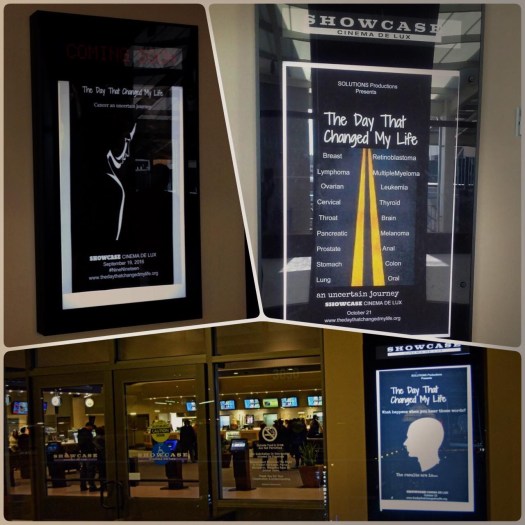
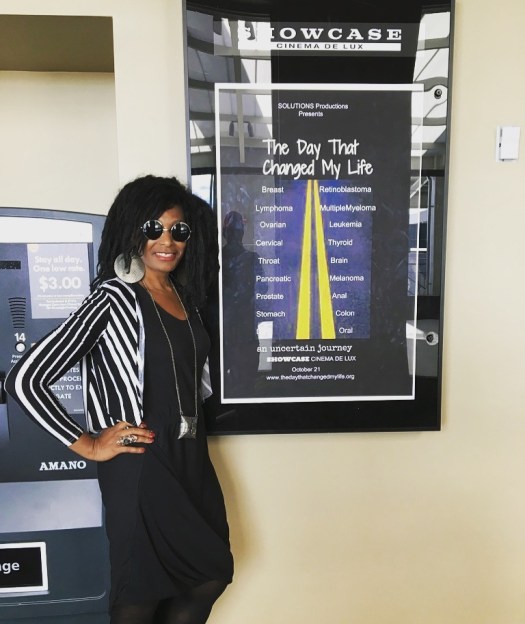
The documentary The Day That Changed My Life – cancer an uncertain journey is an exploration into the lives of those who have been touched by cancer. It is a moving, inspiring and uplifting journey and has had multiple showings in the theater. Hear the stories from the perspective of the parents, the children, the best friend, the clergy, the healthcare team and most importantly – the cancer patient.

The book tour may be separate and it will be similar to the screenings as it will not only be held at a typical book store, but libraries, cancer support groups, college campuses – specifically targeting social workers, psychology and health professional students, church health ministry departments, book clubs, etc. The books can be made available at the screenings as well.

Please let me know if you are interested and open to joining me on my mission by hosting a viewing or book discussion. Moving forward with bringing cancer awareness in 2019. Are you on board?

The Day That Changed My Life Documentary
http://www.thedaythatchangedmylife.org/